Disclaimer: The results provided by this calculator are for informational and educational purposes only and should not be considered professional advice.
Accuracy is not guaranteed, and you should consult a qualified professional for decisions related to finance, health, legal matters, or medical treatment.
By using this tool, you acknowledge that CalcZen.com is not responsible for any actions taken based on its results.
Decoding Your Weight: Why 68kg in Stone is a Global Milestone You Should Know
C
CalcZen.com
Updated: Jul 14, 2026
Have you ever stepped onto a scale while traveling abroad, or perhaps looked at a fitness plan from across the pond, and felt like you were reading a different language? It happens to the best of us. One minute you’re tracking your progress in kilograms, and the next, someone asks you how many "stone" you weigh. If you've found yourself staring at the number 68 on a digital display and wondering exactly how that translates into the traditional British system, you’re in the right place.
At Calczen.com, we believe that numbers shouldn't be a barrier to understanding your body or your health. Understanding 68kg in stone isn't just about a math equation; it’s about cultural context, history, and making sure you feel confident in your own skin, no matter which unit of measurement is being used. Today, we’re going deep into the world of weight, units, and why 68 kilograms is such a fascinating point on the scale.
The Cultural Tug-of-War: Kilograms vs. Stone
Most of the world has embraced the metric system with open arms. It’s logical, it’s based on tens, and it makes scientific sense. However, in the UK and Ireland, the "stone" remains a stubborn and beloved relic of the imperial past. While younger generations are moving toward kilograms, the stone is still the "emotional" weight unit for millions. When you tell a Brit you weigh 68 kilograms, they might nod politely, but in their head, they are frantically doing the mental gymnastics to see if that means you’re roughly the size of a rugby player or a marathon runner.
So, why 68kg? For many adults, 68kg represents a very common "sweet spot" in fitness and health. It’s a weight that often sits right in the middle of a healthy BMI range for average-height individuals. Knowing your weight as 68kg in stone allows you to communicate your health journey across borders effortlessly.
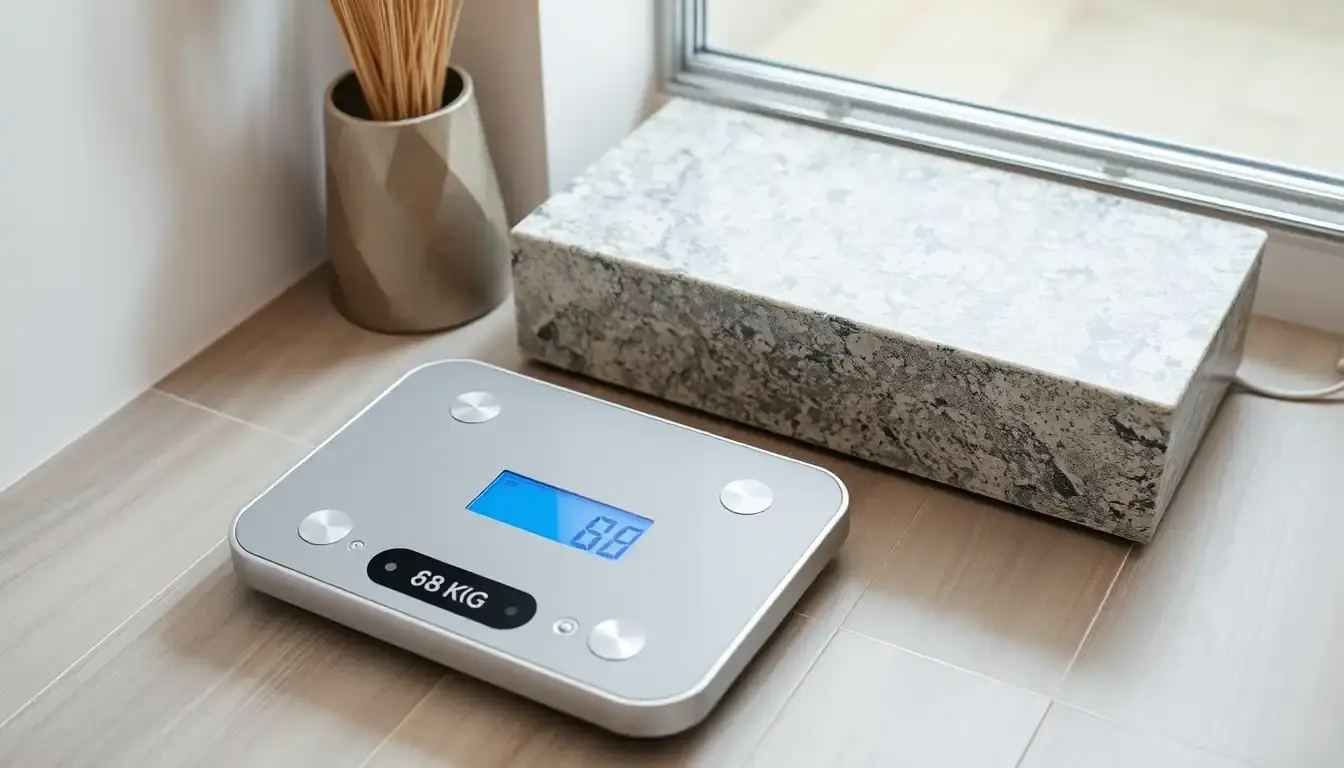
The Quick Answer: 68kg is approximately 10 stone and 10 pounds (or 10.7 stone). It’s a solid, healthy weight for many, representing a balance of strength and agility.
The History of the Stone: More Than Just a Rock
It sounds primitive, doesn't it? "I weigh ten stones." It conjures up images of medieval merchants piling literal rocks onto a balance scale to weigh wool or grain. And honestly? That’s exactly where it started. The "stone" was a standard of weight that varied wildly depending on what you were weighing and where you were. Eventually, the British government stepped in to standardize it at 14 pounds.
But why 14? Why not 10? The history is a bit murky, but it likely stems from the way goods were divided and traded in local markets. Today, the stone is almost exclusively used for human body weight. You won’t see a bag of flour weighed in stones, but you will definitely hear it mentioned at the doctor’s office in London. When we look at 68kg in stone, we are looking at a bridge between the ancient market stalls and modern digital health apps.
Why the Metric System Usually Wins
If you're using a tool at Calczen.com's unit converters, you’ll notice that kilograms are often the default. This is because the metric system is universal. Whether you are in Tokyo, Paris, or New York, a kilogram is a kilogram. It’s defined by the laws of physics. The stone, while charming, is a bit of an outlier. However, knowing both keeps you versatile. If you’re a digital nomad or an avid traveler, being "unit-bilingual" is a secret superpower.
Breaking Down 68kg in Stone: The Math Made Simple
Let’s get into the nitty-gritty. If you want to calculate this yourself without a tool, here is the secret formula. One kilogram is equal to approximately 2.20462 pounds. Since there are 14 pounds in a stone, you have to do a two-step dance. First, find the total pounds, then divide by 14. For 68kg, the math looks like this:
68 x 2.20462 = 149.91 pounds
149.91 ÷ 14 = 10.70 stone
Now, most people don’t say "I weigh 10.7 stone." They say, "I’m 10 stone, 10 pounds." That remainder—the .7—is actually 10 pounds. So, if you’re 68kg, you’re just a hair under 11 stone. That’s a great piece of trivia for your next trivia night, or just helpful info for your next medical check-up.
The "Feel" of 68kg
Numbers on a page are one thing, but how does 68kg feel in the real world? In the context of 68kg in stone, 10st 10lb is often associated with a lean, athletic build for someone around 5'8" or 5'9". It’s the weight of a professional lightweight boxer or a fit cyclist. It’s a weight that suggests you have a good amount of functional muscle without being overly bulky.
Common Mistakes When Converting Weight
I’ve seen it a thousand times—someone tries to convert their weight and ends up thinking they’ve gained or lost 20 pounds overnight because of a decimal error. Here are the pitfalls to avoid:
The "10 vs 14" Confusion: Many people instinctively want to divide by 10 because our brains love the decimal system. Remember, a stone is 14 pounds. If you divide by 10, your numbers will be way off.
Forgetting the Ounces: If you are looking for pinpoint accuracy, those little decimals after the pounds matter. 68kg is closer to 150 pounds than 149, which can shift your "stone and pounds" result slightly.
Scale Calibration: Sometimes the issue isn't the math; it’s the scale. If you’re switching between units on a physical device, make sure it’s leveled. Even a small tilt can change a 68kg reading to 67kg or 69kg.
If you want to read more about the scientific definitions of these units, you can check out the Wikipedia entry for 68kg in stone, which dives into the historical variations of the stone unit.
Master Your Numbers with Calczen
Tired of doing mental gymnastics every time you see a different unit? We’ve got you covered. Calczen.com is your home for clean, fast, and ad-light tools that take the stress out of math. Whether you're converting weight, checking your BMI, or planning your budget, our tools are designed to work perfectly on your phone or desktop.
You might wonder, "Does it really matter if I'm 10.7 stone or 10.8 stone?" In the grand scheme of a happy life, perhaps not. But when you are tracking progress—whether that's training for a marathon, managing a health condition, or just trying to fit into your favorite pair of jeans—consistency is king. Using a reliable kg to stone converter ensures that your data is clean. When your data is clean, your insights are better. You can see the real trends in your health journey rather than just noise from bad conversions.
At the end of the day, 68kg is just a number. It doesn't define your worth, your beauty, or your capability. But understanding that number—knowing how it fits into the world’s different measurement systems—empowers you. It gives you the confidence to talk to doctors, trainers, and friends anywhere in the world without hesitation.
Final Thoughts on 68kg in Stone
The journey from kilograms to stone is a walk through history. It’s a reminder of how we’ve evolved from using rocks and manual scales to high-speed digital tools. Whether you prefer the logical flow of the metric system or the traditional weightiness of the stone, the most important thing is that you have the right tools to understand the data. Next time you see 68kg in stone, you won't just see a confusing decimal; you'll see a healthy, 10-stone-10-pound version of yourself ready to take on the day.
Keep calculating smarter, keep curious, and remember that we are always here to help you crunch the numbers that matter most. Your health journey is a marathon, not a sprint—make sure you're measuring it the right way!