Disclaimer: The results provided by this calculator are for informational and educational purposes only and should not be considered professional advice.
Accuracy is not guaranteed, and you should consult a qualified professional for decisions related to finance, health, legal matters, or medical treatment.
By using this tool, you acknowledge that CalcZen.com is not responsible for any actions taken based on its results.
Unlocking Creativity: The Ultimate Guide to Using an Ambigram Generator for Stunning Word Art
C
CalcZen.com
Updated: Jul 14, 2026
Have you ever looked at a word and wished it could tell two stories at once? Imagine a design that says "Love" when you look at it normally, but reveals "Life" when you flip it upside down. That is the magic of the ambigram—a typographic feat that blends symmetry, psychology, and artistic flair. If you've ever felt like your logos, tattoos, or creative projects were missing that "wow" factor, an ambigram generator might just be the secret weapon you've been looking for.
In this guide, we’re going to dive deep into the world of reversible typography. We’ll look at why these designs fascinate us, how they work on a technical level, and how you can use modern resources like those found on Calczen.com to bring your own ideas to life. Whether you’re a professional designer or just someone who loves a good optical illusion, you’re in the right place.
What Exactly is an Ambigram?
At its core, an ambigram is a calligraphic design that manages to depict one or more words when viewed from different orientations, perspectives, or symmetries. While the term was popularized in the late 20th century, the concept of mirrored or rotational text has been around for ages. It’s the ultimate puzzle for the eyes.
Think of it as a bridge between linguistics and geometry. You aren't just writing a word; you are sculpting it. Using an ambigram generator helps bridge the gap between "I have a cool idea" and "I have a finished SVG file," taking the heavy lifting out of the initial sketching phase.
Fun Fact: The word "ambigram" was coined by Douglas Hofstadter, a scholar of cognitive science. It perfectly captures the essence of "ambiguity" (having two meanings) and "gram" (written).
The Different Types of Ambigrams
Not all ambigrams are created equal. Depending on how you want your viewer to interact with the art, you might choose a different style of symmetry. Understanding these types is the first step to mastering the ambigram generator experience.
1. Rotational Ambigrams
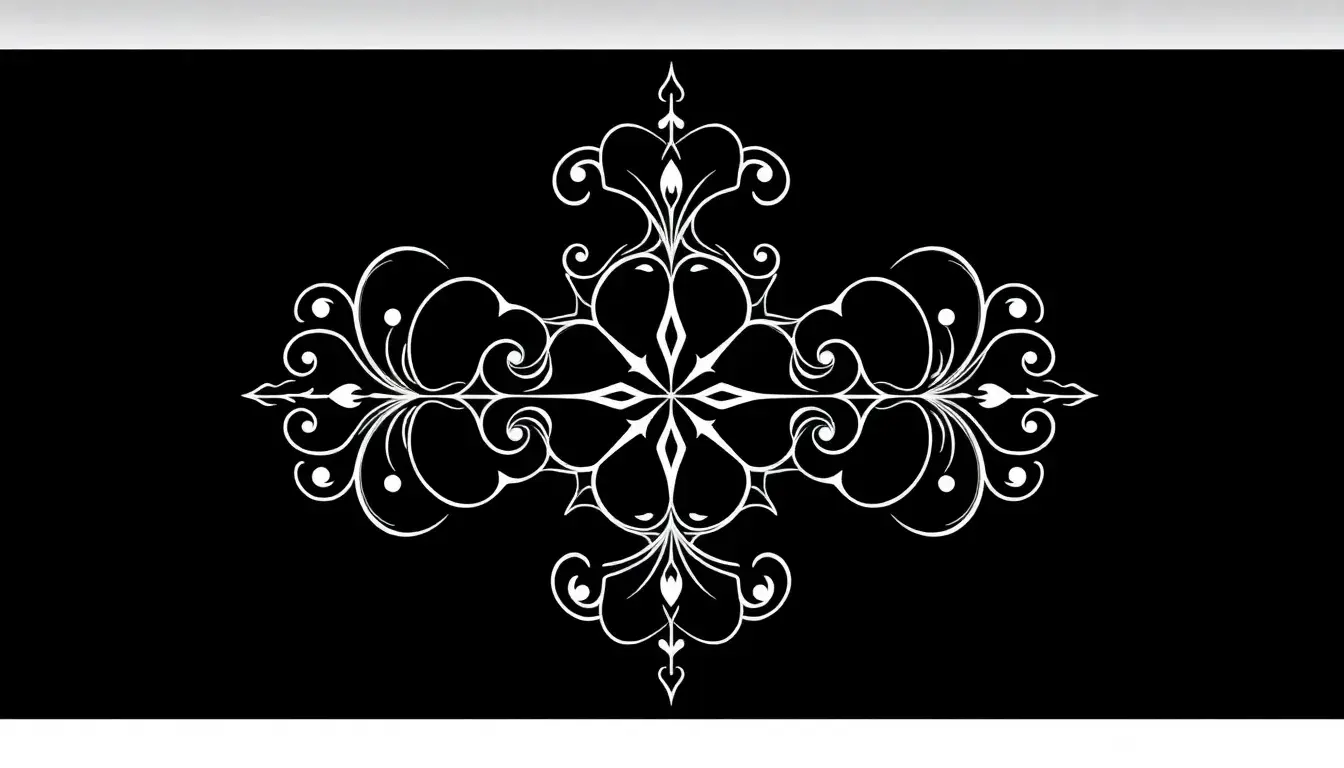
This is the most common type. A rotational ambigram looks the same (or reveals a different word) when rotated by a certain degree, usually 180 degrees. When you see a tattoo on someone’s forearm that reads the same from their perspective and yours, that’s a rotational masterpiece.
2. Mirror Ambigrams
As the name suggests, these are designed to be read when reflected in a mirror. These are particularly popular for window decals or clothing designs. They challenge the brain to recognize letterforms in reverse, which is a fascinating exercise in pattern recognition.
3. Chain Ambigrams
In this style, words are linked together in a continuous chain. The letters often overlap, and the symmetry is found in the repetition of the sequence. These are great for decorative borders or infinite loop concepts.
4. Symbiotograms
A symbiotogram is an ambigram that reveals a completely different word when rotated. For example, a design that reads "Hope" right-side up and "Faith" upside down. These are notoriously difficult to design by hand, which is where a high-quality ambigram generator truly shines.
Why Use an Ambigram Generator?
You might be wondering: "Can't I just draw this myself?" You certainly can, but let me tell you from experience—designing a symmetrical word is harder than it looks. I remember trying to sketch a gift for a friend’s wedding using their names. Three hours and a wasted sketchbook later, I realized that the math behind the letter curves was getting the better of me.
Here is why a digital tool is a game-changer:
Instant Prototyping: You can see if your word choice even "works" in seconds. Some letter combinations (like 'o' and 'n') are easy, while others (like 'f' and 'z') are a nightmare.
Geometric Precision: A generator ensures that the weights of the lines are consistent. This is crucial for the illusion to hold up when the image is flipped.
SVG Output: Most modern tools provide SVG (Scalable Vector Graphics) files. This means you can scale your design from a business card to a billboard without losing any crispness.
Creative Inspiration: Sometimes the generator suggests a letter shape you never would have thought of. It acts as a digital brainstorming partner.
Step-by-Step: Creating Your First Design
Ready to try it out? Using an ambigram generator is usually a straightforward process, but there are a few tips to ensure you get a professional-looking result every time.
Step 1: Choose Your Words Wisely
Start simple. Words with a similar number of letters usually result in better symmetry. If you're trying to turn a 3-letter word into a 10-letter word, the generator has to stretch the 3 letters significantly, which can make them hard to read.
Step 2: Select a Font Style
Blackletter or Gothic styles are often the easiest to turn into ambigrams because their vertical strokes are very similar. Script fonts are much harder but offer a more elegant, "tattoo-style" look. Most generators will give you a few options to toggle between.
Step 3: Refine and Edit
Don't just take the first result. Look at the "flip." Is the word still legible? Sometimes moving a single pixel or changing the curve of a 't' can make the difference between a mess and a masterpiece. (Pro tip: If you're using the tools on Calczen.com, try different capitalization to see how the letterforms change!)
The Psychology of Why We Love Symmetrical Art
There is a reason why we stop and stare at ambigrams. Our brains are hardwired to look for patterns and symmetry. When we see something that defies our expectations—like a word that stays the same when it should be upside down—it triggers a "reward" response in the brain. It’s like solving a mini-puzzle.
This is why ambigrams are so effective in branding and personal art. They demand more than a half-second glance. They invite the viewer to participate in the art by turning their head or flipping their phone. That engagement is priceless in a world full of static, boring content.
Ready to Flip Your Perspective?
Stop struggling with messy sketches and start creating professional-grade word art today. Our suite of creative tools at Calczen.com makes it easier than ever to handle complex designs with zero stress.
Even with a powerful ambigram generator, there are a few pitfalls you should watch out for. I’ve seen plenty of "ambigrams" that just look like ink blots because the designer ignored these basic rules:
Over-complicating the design: If you have to explain what the word says, the ambigram has failed. Legibility is king.
Ignoring "Negative Space": Sometimes the space between the letters is just as important as the letters themselves. If the gaps are too small, they'll bleed together when printed.
Forgetting the "Squint Test": Squint at your design. If you can still recognize the word shapes, you’re on the right track. If it turns into a grey blob, you need more contrast.
Real-World Applications for Ambigrams
Where can you actually use these designs? The possibilities are endless, but here are a few of my favorite ways to use the results from an ambigram generator:
Tattoos: This is the #1 use case. A name that reads the same for you and the person looking at you is a classic choice.
Logo Design: Companies that want to emphasize "balance," "recycling," or "perspective" often use ambigrams to tell their brand story.
Book Covers: Dan Brown’s Angels & Demons famously used ambigrams to represent the ancient secret societies in the plot.
Personal Stationery: Adding a symmetrical monogram to your letters or business cards adds an instant layer of sophistication.
If you're looking for more technical background on how these generators evolved, you can check out the history of typographic generators to see how far we've come from hand-drawn calligraphy to instant SVG creation.
Final Thoughts: Calculate Your Creativity
At the end of the day, an ambigram generator isn't just about "generating" text—it's about opening a door to a different way of thinking. It teaches us that perspective is everything. A word isn't just a fixed set of characters; it's a shape that can be molded, flipped, and reimagined.
I’ve spent years testing different online tools, and the ones that stick are the ones that are clean, fast, and stay out of your way. That’s exactly what we aim for at Calczen.com. We want you to spend less time fighting with laggy interfaces and more time enjoying the results of your work.
So, go ahead. Type in your name, your favorite word, or a secret message. See what the symmetry reveals. You might just surprise yourself with what you can create when you have the right sidekick in your browser bookmarks.