Disclaimer: The results provided by this calculator are for informational and educational purposes only and should not be considered professional advice.
Accuracy is not guaranteed, and you should consult a qualified professional for decisions related to finance, health, legal matters, or medical treatment.
By using this tool, you acknowledge that CalcZen.com is not responsible for any actions taken based on its results.
The Ultimate Guide to Using a Dirt Calculator for Flawless Landscaping
C
CalcZen.com
Updated: Jul 10, 2026
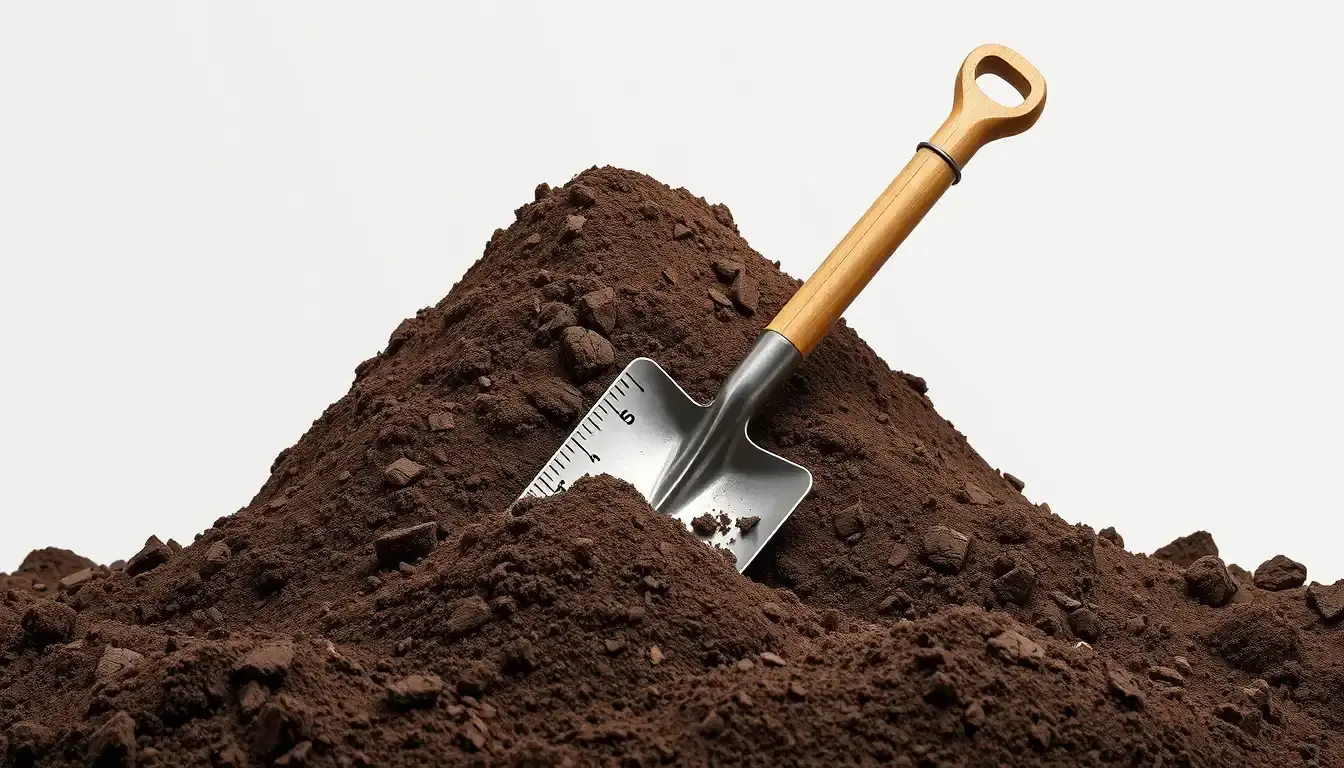
You’re standing in your backyard, shovel in hand, staring at a patch of grass that’s destined to become a beautiful raised garden bed. You’ve got the vision, the seeds, and the enthusiasm. But then, the dreaded question hits: "How much dirt do I actually need?" If you guess too low, you’re making three extra trips to the garden center in a borrowed truck. If you guess too high, you’ve got a literal mountain of topsoil sitting on your driveway with nowhere to go.
We’ve all been there. Estimating volume by eye is a recipe for a weekend headache. That’s exactly why a reliable dirt calculator is the unsung hero of the DIY world. Whether you’re filling a sandbox, leveling a lawn, or prepping a foundation, getting your "cubic yards" right is the difference between a smooth project and a logistical nightmare. In this guide, I’ll walk you through everything you need to know to calculate smarter and finish faster.
Why "Eye-Balling" It Always Fails
It’s tempting to look at a 10x10 space and think, "Yeah, about ten bags should do it." But here’s the kicker: soil isn’t just about surface area; it’s about depth. Once you factor in how much soil settles after the first rain, your initial estimate usually disappears into the earth. Most professionals work in cubic yards, a measurement that can feel totally alien if you’re used to just buying bags at the store.
When I first started my own landscaping journey, I spent more time returning half-empty bags than I did actually planting. I realized then that math isn’t the enemy—it’s the tool that keeps your budget intact. By using a specialized Dirt/Soil Volume Calculator, you translate those messy real-world dimensions into a single, actionable number.
Pro Tip: The Settlement Factor Always add about 10-15% to your final calculation. Soil is fluffy when it’s delivered but compacts significantly once it’s spread and watered. If your dirt calculator says you need 5 yards, order 5.5. Your future self will thank you when the bed doesn't look half-empty next month!
Breaking Down the Math: Length, Width, and Depth
To get an accurate result from a dirt calculator, you need three key pieces of information. It sounds simple, but getting these measurements right is where most people stumble. Let’s break it down like we’re chatting over a fence.
1. Measuring the Length and Width
For a standard rectangular bed, this is straightforward. But what if your garden is a funky kidney shape? My advice: break it into smaller imaginary rectangles. Measure the longest part and the widest part of each section. It’s better to have a tiny bit of leftover dirt than a gaping hole in your landscape design.
2. The Depth Dilemma
This is where most errors happen. Depth is usually measured in inches, while length and width are in feet. If you try to do the math in your head without converting, you’ll end up ordering enough soil to bury your house! A good dirt calculator handles this conversion for you, letting you plug in "12 feet long" and "6 inches deep" without a second thought.
3. Understanding Cubic Yards
Most bulk soil suppliers sell by the cubic yard. For reference, one cubic yard is a cube that is 3 feet wide, 3 feet long, and 3 feet tall. That’s roughly the size of a standard washing machine. Knowing this helps you visualize exactly what that delivery truck is going to drop on your property.
Real-World Scenarios: When You'll Need an Estimate
You’d be surprised how often a dirt calculator comes in handy. It’s not just for professional contractors; it’s for anyone who wants to save money and time. Here are a few times I’ve relied on one:
Raised Garden Beds: These are deep, meaning they require a significant volume of high-quality garden mix.
Lawn Leveling: If you have low spots that collect water, you’ll need a "top-dressing" of sand and soil. This requires a very shallow depth (usually 1-2 inches) spread over a large area.
Hardscaping Base: Before laying pavers or bricks, you need a solid base of gravel and sand. The math remains the same—it’s all about volume!
Filling Large Planters: Buying individual bags for massive decorative pots is expensive. Bulk is almost always better if you have a few to fill.
Ready to Crunch the Numbers?
Don't let your DIY project stall because of bad math. Visit Calczen.com for a fast, clean, and completely free Dirt/Soil Volume Calculator. No pop-ups, no lag—just the answers you need to get back to your garden.
Even with a great tool, human error can sneak in. Here’s what I’ve learned from my own "oops" moments:
Forgetting the "Fluff"
Fresh soil is full of air. As it sits, that air escapes and the soil sinks. If you fill a bed exactly to the brim on day one, it’ll be two inches lower by day thirty. Always overfill slightly!
Mixing Units
Double-check if you are measuring in feet or inches. I once saw a neighbor accidentally calculate a 4-foot deep garden bed instead of 4 inches because they entered the data incorrectly. That’s a very expensive mistake.
Ignoring Delivery Costs
Bulk soil is cheaper per yard, but delivery fees can be steep. If you only need 0.5 yards, it might actually be cheaper to buy 20 bags at the local hardware store. Use your dirt calculator to find that "tipping point" where bulk delivery becomes the smarter financial move.
Final Thoughts: Calculate Smarter, Not Harder
At the end of the day, your home projects should be about the joy of creation, not the stress of mismanaged supplies. Taking sixty seconds to run your measurements through a dirt calculator saves you hours of labor and potentially hundreds of dollars in wasted materials or extra delivery fees. It’s the small step that makes the big difference.
I’ve tested dozens of online resources, and the best ones are always the simplest. You want a tool that loads instantly on your phone while you’re standing in the dirt, gives you the result in cubic yards, and gets out of your way. That’s the philosophy we live by—helping you handle numbers with total confidence so you can focus on the fun part: making your home look amazing.
If you're curious about the science of volume or want to see more technical definitions, you can always check out more in-depth resources like this volume measurement guide. But for your daily projects? Keep it simple, keep it accurate, and keep it Calczen.