New Feature: Calculator results are now clearer and easier to use ⚡

Z-Score Calculator

85 Uses
6 min read
Verified Accuracy

Disclaimer: The results provided by this calculator are for informational and educational purposes only and should not be considered professional advice. Accuracy is not guaranteed, and you should consult a qualified professional for decisions related to finance, health, legal matters, or medical treatment. By using this tool, you acknowledge that CalcZen.com is not responsible for any actions taken based on its results.

calczen-widget
⚡ Powered by CalcZen • Secure & Private • Real-time Results

How to Calculate Z Score: The Ultimate Guide to Mastering Standard Scores at Calczen.com

C

CalcZen.com

Updated: Jun 02, 2026

how to calculate z score

Ever sat in a statistics class—or maybe just looked at a massive spreadsheet of data—and wondered how on earth you're supposed to compare apples to oranges? Maybe you’re comparing your SAT score to a friend’s ACT score, or trying to figure out if your recent workout performance was truly "above average" for your age group. That’s exactly where knowing how to calculate z score comes in to save the day.

Welcome to your friendly neighborhood guide to one of the most powerful numbers in math. I’ve spent years digging through messy data sets and clunky academic software, and if there’s one thing I’ve learned, it’s that a clean, simple approach to math beats a complex one every single time. At Calczen.com, we’re all about making those "head-scratcher" moments disappear with tools and advice that just work.

What Exactly Is a Z-Score, Anyway?

Before we jump into the numbers, let’s talk about what we’re actually looking at. In the world of Math & Algebra Tools, the z-score (often called a standard score) is like a universal translator for data. It tells you exactly how many standard deviations a specific value is from the mean (the average).

Think of it like this: If the average height in a room is 5'10" and you’re 6'2", you know you're taller than average. But how much taller in the context of the whole group? Is your height common, or are you an outlier? The z-score puts a precise number on that distance. It’s the secret sauce for understanding probability and distribution.

Pro Tip: A z-score of 0 means your value is exactly average. A positive score (like +1.5) means you’re above average, and a negative score (like -2.0) means you’re below average. Simple, right?

The Magic Formula: How to Calculate Z Score Step-by-Step

I know, I know—mentioning "formula" usually makes people want to close the tab. But stick with me! This one is actually quite elegant. To find your answer, you only need three pieces of information:

  • The Value (x): The specific number you’re looking at.
  • The Mean (μ): The average of the entire group.
  • The Standard Deviation (σ): A measure of how "spread out" the numbers are.

The Z-Score Formula

$z = \frac{x - \mu}{\sigma}$

Let’s break down the manual process of how to calculate z score so you can see the logic before you let a computer do the heavy lifting for you.

Step 1: Subtract the Mean from your Value

First, you take your specific number ($x$) and subtract the average ($\mu$). This tells you the raw distance from the center. If you get a negative number here, don’t panic! That just means your value is lower than the average.

Step 2: Divide by the Standard Deviation

Now, take that result and divide it by the standard deviation ($\sigma$). This "normalizes" the distance. It converts that raw distance into "standard deviation units." This is the crucial step that allows you to compare different sets of data accurately.

Real-World Example: Testing Your Genius

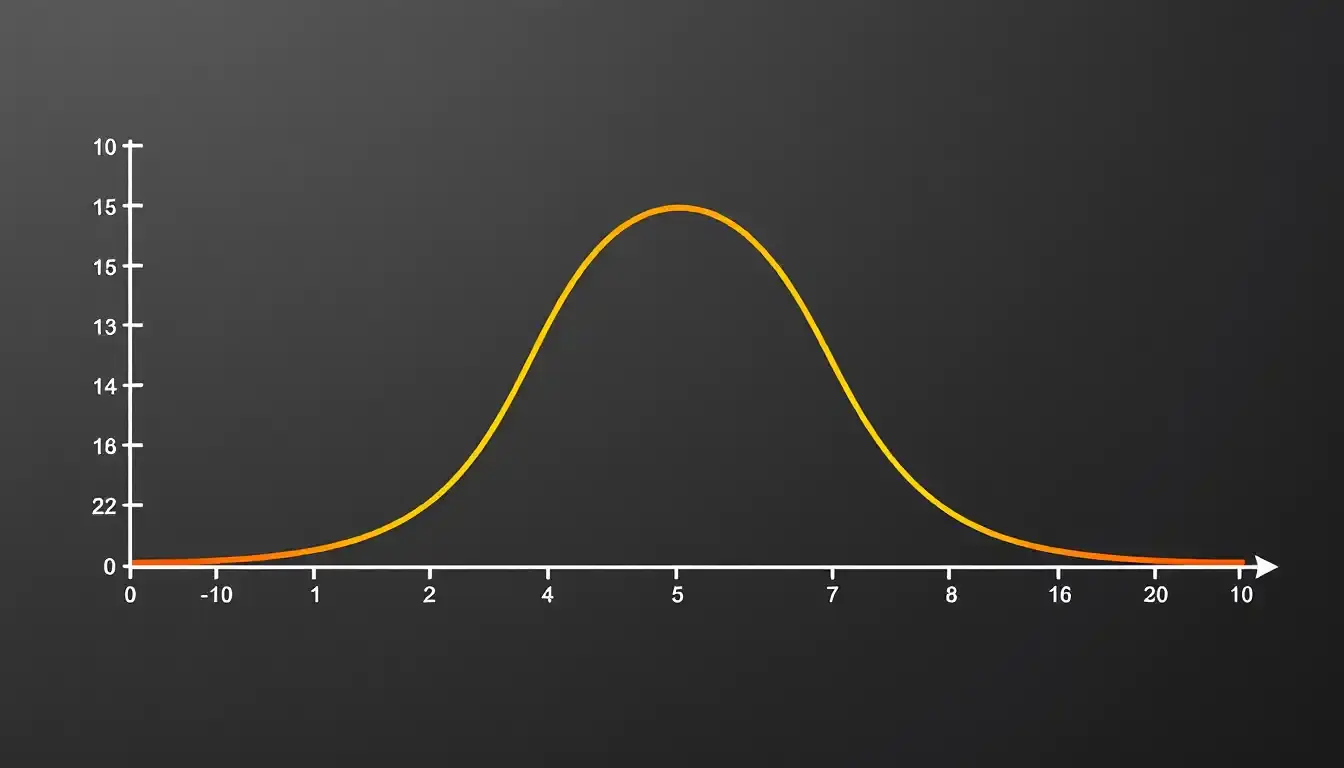
Let’s say you took an IQ test. You scored a 130. You know the average IQ is 100, and the standard deviation is 15. You’re feeling pretty good, but you want to know exactly where you stand on the "bell curve."

Let's plug it in:

  1. Value (x): 130
  2. Mean (μ): 100
  3. Standard Deviation (σ): 15

Calculation: $130 - 100 = 30$. Then, $30 / 15 = 2.0$. Your z-score is +2.0. In the world of stats, this is huge! It means you are two full standard deviations above the average person.

If you want to dive deeper into the historical context of these distributions, you can check out the Wikipedia entries on standard scores, but for everyday practical use, our Z-Score Calculator on Calczen.com handles the math in milliseconds.

Why Does This Even Matter?

You might be thinking, "Cool math trick, but when will I use this?" You’d be surprised! Knowing how to calculate z score is vital in several fields:

1. Education and Grading

Teachers often use z-scores to "curve" grades. If a test was incredibly hard and the highest grade was a 70%, a z-score helps the teacher see who performed best relative to the struggle of the whole class, rather than just looking at the raw percentage.

2. Finance and Investing

Stock market analysts use z-scores to determine if a stock is overvalued or undervalued. If a stock’s price has a z-score of +3.0 compared to its historical average, it might be "overbought" and due for a price drop.

3. Health and Fitness

Ever look at a growth chart for a child? Or a bone density scan? Those are almost always based on z-scores. They compare an individual's metrics to a healthy reference population to see if there are any red flags.

Calculate Smarter at Calczen.com

Stop stressing over manual formulas and decimal points. Our suite of free, ad-light math tools is designed to give you instant, accurate results so you can get back to what matters most.

Explore All Math & Algebra Tools

Common Mistakes to Avoid

I’ve seen plenty of people trip up when learning how to calculate z score. Here are the "gotchas" to watch out for:

  • Mixing up the Mean and the Value: Always subtract the average from your number ($x - \mu$), not the other way around. If you swap them, your positive scores will turn negative!
  • Forgetting Order of Operations: If you're using a basic pocket calculator, make sure you hit "equals" after subtracting the mean before you divide by the standard deviation. Otherwise, it might only divide the mean by the SD.
  • Ignoring the "Spread": Remember that a small standard deviation means a z-score is much harder to achieve. In a group where everyone is nearly the same height, being just two inches taller could result in a massive z-score!

Wrapping It Up: Your New Secret Weapon

At the end of the day, math shouldn't feel like a chore. Whether you're a student tackling a mid-term or a professional trying to make sense of a quarterly report, understanding how to calculate z score gives you a level of clarity that raw numbers just can't provide. It turns data into a story—one that tells you exactly where you fit in.

The next time you’re staring at a bell curve or a list of scores, don't sweat it. Just remember the formula, or better yet, head over to Calczen.com. We’ve built our site to be the place I wished I had back in college: fast, clean, and actually helpful. No annoying pop-ups, no confusing jargon—just the answers you need to handle numbers with confidence.

Go ahead and bookmark us. Your future self (and your sanity) will thank you during your next study session or budget review. Happy calculating!

Share this Tool

Discussion (0)

Moderated
Security Check: 3 + 1 =

No comments yet. Start the conversation!

Related Tools & Calculators

Master Your Data.

Get weekly updates on new financial regulations, mathematical formulas, and CalcZen tools.

Join 25,000+ data-driven professionals. No spam, ever.

CALCZEN