Disclaimer: The results provided by this calculator are for informational and educational purposes only and should not be considered professional advice.
Accuracy is not guaranteed, and you should consult a qualified professional for decisions related to finance, health, legal matters, or medical treatment.
By using this tool, you acknowledge that CalcZen.com is not responsible for any actions taken based on its results.
Mastering Dimensions: Why You Need a Reliable Nether Portal Calculator at Calczen.com
C
CalcZen.com
Updated: Jul 14, 2026
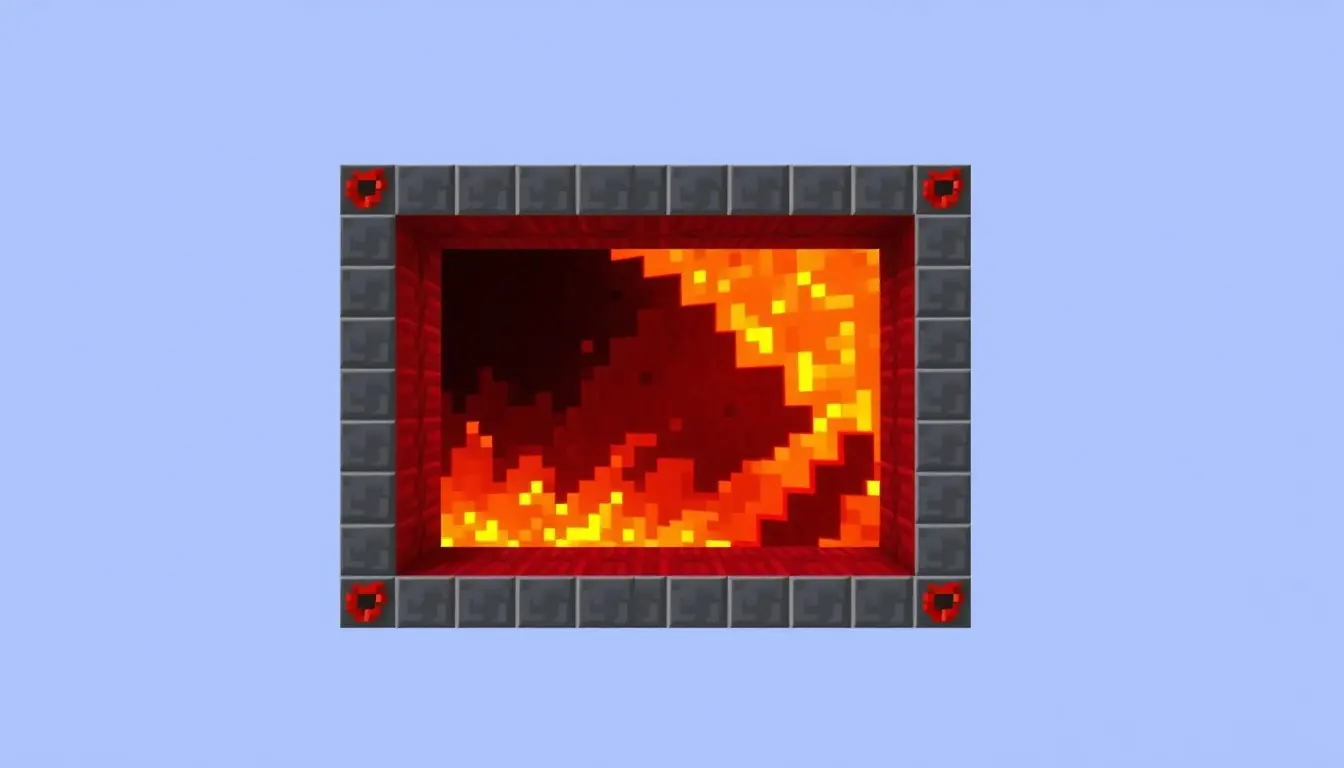
If you've ever spent hours building a magnificent castle in the Overworld, only to step through a purple haze and find yourself dangling over a lake of lava in the Nether, you know the struggle. We’ve all been there—trying to "eyeball" the math, assuming that "roughly that way" is good enough. Spoiler alert: in the world of block-based survival, it rarely is. That’s why a precise nether portal calculator is more than just a convenience; it’s a survival essential.
At Calczen.com, we’re obsessed with making your gaming life easier. We know that when you're in the zone, the last thing you want to do is tab out to a clunky, ad-filled site that takes forever to load. You need speed, you need accuracy, and you need to get back to your build. Let’s dive into why understanding the 1:8 ratio is the key to unlocking true fast travel.
The Math Behind the Madness: The 1:8 Ratio
At its core, the relationship between the Overworld and the Nether is a simple matter of scale. For every one block you travel in the Nether, you’ve essentially crossed eight blocks in the Overworld. It sounds simple enough on paper, but when you’re dealing with negative coordinates, varying Y-levels, and the game’s "search radius" logic, things get messy quickly.
Pro Tip: Always remember that the Y-coordinate (your height) doesn't change between dimensions for the sake of linking, but it does matter for finding a safe spot to stand!
When you place a portal in the Overworld at coordinates (800, 64, 800), the game looks for a corresponding portal in the Nether at (100, 64, 100). If one doesn't exist, it tries to generate one nearby. This "nearby" is where the headaches begin. If it generates at (115, 50, 90) because of a lava ocean, your return trip might send you to a completely different spot in the Overworld. This is why using a dedicated nether portal calculator to get the exact numbers before you light that obsidian is a game-changer.
Step-by-Step: How to Link Your Portals Perfectly
Don't leave your travel to chance. Follow this simple workflow to ensure your hubs are connected like a professional metro system.
1. Secure Your Overworld Coordinates
Stand right in the center of your Overworld portal. Press F3 (on Java) or check your map/settings (on Bedrock) to find your X, Y, and Z. Write them down! (Yes, even the negative signs matter—trust me, I’ve learned that the hard way after ending up 5,000 blocks from home).
2. Run the Numbers
Take those X and Z numbers and divide them by 8. This is where a quick trip to Gaming & Pop Culture Generators saves you the mental gymnastics. Our tool handles the division instantly, so you don't have to worry about rounding errors or "is -450 divided by 8 actually -56.25?"
3. Build the Nether Side Manually
This is the secret sauce. Don't just step through and hope for the best. Go into the Nether via a temporary portal, travel to the exact coordinates provided by the nether portal calculator, and build the portal frame there. Once you light it, the "handshake" between the two points is locked in.
Common Mistakes That Break Your Links
I’ve tested dozens of setups, and these are the three things that usually go wrong:
The "Close Enough" Trap: Being 10 blocks off in the Nether means being 80 blocks off in the Overworld. If two portals are too close together, they’ll "bleed" into each other, and you'll always come out of the first one you built.
Ignoring the Y-Axis: While X and Z are the primary drivers, if your Nether portal is at Y=120 and your Overworld one is at Y=10, the game might struggle to prioritize the link if there’s another portal at Y=60.
Forgetting to Destroy Auto-Generated Portals: If the game made a "bad" portal for you, break it! If you leave it standing, your new, calculated portal might get confused.
Calculate Your Next Adventure
Ready to build the ultimate fast-travel hub? Don't guess—get the exact coordinates in seconds with our suite of gaming tools.
We built Calczen because we were tired of "utility" sites that felt like they were trying to sell us a car while we were just trying to do homework or play a game. Our nether portal calculator is designed with a "mobile-first" mindset. That means you can have your phone sitting on your desk next to your keyboard, punch in the numbers, and get results without the site jumping around as ads load.
We believe math should be a tool, not a hurdle. Whether you're a redstone engineer or a casual builder, having a reliable source for dimension scaling and coordinate conversion makes the game more about creativity and less about frustrating walks back to your base.
Final Thoughts
Linking portals is one of those "level up" moments in gaming. Once you master it, the world feels smaller, more accessible, and way more fun. Bookmark Calczen.com today, and the next time you're standing in front of an obsidian frame, you'll have the confidence of knowing exactly where you're going. Happy mining!