Disclaimer: The results provided by this calculator are for informational and educational purposes only and should not be considered professional advice.
Accuracy is not guaranteed, and you should consult a qualified professional for decisions related to finance, health, legal matters, or medical treatment.
By using this tool, you acknowledge that CalcZen.com is not responsible for any actions taken based on its results.
Mastering Your Oasis: Why a Precise Pool Volume Calculator is a Backyard Essential
C
CalcZen.com
Updated: Jul 14, 2026
There is nothing quite like the first jump into a sparkling, crystal-clear pool on a sweltering July afternoon. But as every pool owner knows, that pristine blue water doesn't happen by accident. It’s the result of a delicate chemical dance—one that relies entirely on knowing exactly how much water you’re working with. If you’ve ever stood on your deck, jug of chlorine in hand, wondering if your "guesstimate" is about to turn your hair green or leave the water cloudy, you aren't alone. That’s exactly where a reliable pool volume calculator becomes your best friend in the world of Construction & DIY Estimators.
The "Guesswork" Trap: Why Accuracy Actually Matters
I remember my first summer with a medium-sized above-ground pool. I figured, "It looks like about 10,000 gallons, give or take." I treated the water based on that hunch, and within three weeks, I had a backyard swamp that looked like it belonged in a creature feature movie. The problem? My "hunch" was off by nearly 3,000 gallons. I was chronically under-treating the water, and the algae were throwing a party at my expense.
Using a Swimming Pool Volume Calculator isn’t just about being a math nerd; it’s about saving money and protecting your equipment. When you over-calculate, you waste expensive chemicals and risk skin irritation. When you under-calculate, you invite bacteria and algae, eventually leading to a costly "drain and scrub." Whether you are a new homeowner or a seasoned DIYer, getting your dimensions right is the first step toward a stress-free summer.
Pro Tip: Most people think pools are simple boxes, but even a slight slope in the floor can change your volume by hundreds of gallons. Always measure the average depth for the most accurate results!
The Anatomy of a Pool: Shapes and Sizes
Before you dive into the numbers, you have to identify the geometry of your water feature. Pools aren't just one-size-fits-all, and neither is the math behind them. Let's break down the most common shapes you'll encounter.
1. Rectangular and Square Pools
This is the "easy mode" of pool ownership. If your pool is a standard rectangle, the math is straightforward: Length x Width x Average Depth. However, the trick is that "Average Depth" part. If your pool goes from 3 feet to 8 feet, your average depth is (3 + 8) / 2 = 5.5 feet. Plug those into a pool volume calculator, and you’re golden.
2. Round and Circular Pools
Round pools are popular for above-ground setups, and they require a bit of Pi ($ \pi $). You’ll need the diameter (the distance across the center). A good calculator will handle the $ \pi \times r^2 $ part for you, so you don't have to dust off your high school geometry textbook while standing in the sun.
3. Oval and Kidney-Shaped Pools
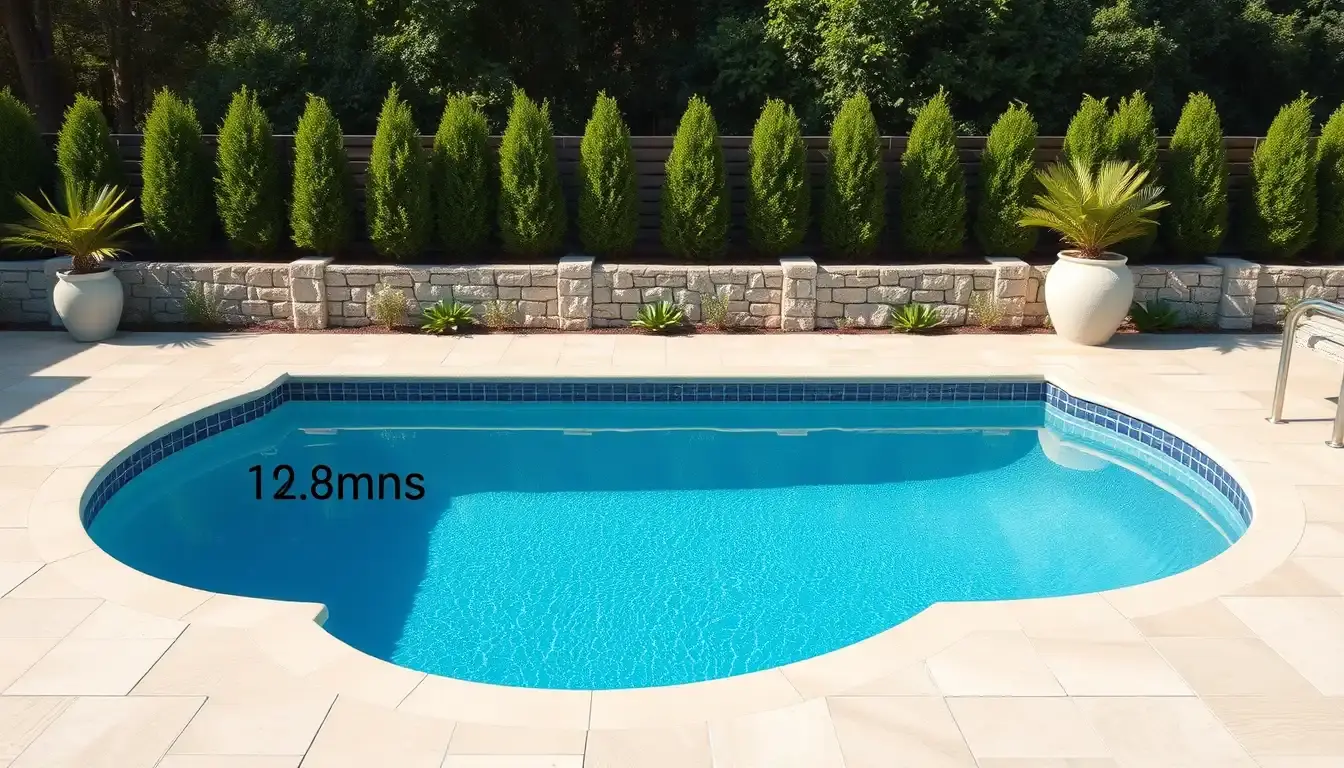
This is where things get interesting. Kidney pools are the beauties of the backyard, but they are a nightmare to calculate by hand. They essentially consist of two different-sized circles joined by a rectangle. Instead of struggling with a measuring tape and a piece of paper, a dedicated pool volume calculator allows you to input the widths of the two "bulbs" and the total length to give you a surprisingly precise estimate.
Gallons vs. Liters: Speaking the Language of Chemicals
Depending on where you live—or where your chemicals were manufactured—you might need to know your pool's capacity in different units. In the United States, we almost exclusively talk in gallons. However, many modern saltwater systems and European-made pumps use liters. A versatile tool should allow you to toggle between these instantly. There’s nothing worse than having the right number in the wrong unit and trying to do the conversion in your head while your kids are splashing you with a cannonball.
For those interested in the deep-dive science of how these measurements are standardized, Wikipedia’s resources on pool maintenance offer great context on fluid dynamics and the history of aquatic engineering. But for the day-to-day work? You just want a clean interface that gives you the answer in three clicks.
Common Mistakes to Avoid (I’ve Made Them All)
Ignoring the Steps: If you have a massive wedding-cake staircase inside the pool, it displaces water. For a 15,000-gallon pool, it might not matter much, but for a small "spool" or cocktail pool, it can be a 5% difference.
Measuring to the Coping: Don't measure the height of the pool wall; measure the height of the water. Most pools are kept about 6 inches below the top edge. Calculating for a full pool when you only fill it 90% leads to over-chemicalization.
The "L-Shape" Oversight: If you have an L-shaped pool, treat it as two separate rectangles. Calculate the volume of each part and add them together. It’s the most accurate way to handle complex architectural designs.
Calculate Smarter at Calczen.com
Ready to get your pool water perfect? Forget the messy scratchpads and the confusing apps. Visit Calczen.com for a fast, ad-light experience that helps you crunch numbers with confidence.
We’ve all been there—you search for a calculator, click a link, and suddenly you’re bombarded with three pop-ups, a video that auto-plays, and a "cookie consent" banner that takes up half the screen. It’s frustrating, especially when you’re just trying to figure out how many chlorine tablets to toss in before a backyard BBQ.
At Calczen.com, we believe tools should be invisible. They should load instantly, work perfectly on your phone while you're standing outside by the pump, and get out of your way. Our Swimming Pool Volume Calculator is built with that philosophy. Whether you’re figuring out the gallons for a massive in-ground installation or just a small backyard DIY project, we’ve optimized our tools to be the fastest path from "I don't know" to "I'm sure."
Why You Should Bookmark Us
Life is full of numbers. From figuring out how much mulch you need for the flower beds to calculating your mortgage interest, we are constantly processing data. Calczen isn't just a site; it's your digital Swiss Army knife. We’re building a library of tools that are:
Ad-Light: No distractions, just results.
Mobile-First: Designed to work as well on your phone as on your desktop.
Reliable: Crunched by enthusiasts who care about accuracy as much as you do.
Final Thoughts: Dive In with Confidence
Owning a pool should be a joy, not a chore. By taking five minutes to use a pool volume calculator, you are setting yourself up for a season of clear water and safe swimming. You’ll save money at the pool store, spend less time scrubbing at the waterline, and have the peace of mind that comes with knowing your backyard oasis is perfectly balanced.
Next time you're prepping for a chemical shock or planning a refill, remember that accuracy is your best defense against the dreaded "green pool." Head over to Calczen.com, plug in your measurements, and get back to what really matters: enjoying the water. Your next calculation—and your sanity—will thank you!