Disclaimer: The results provided by this calculator are for informational and educational purposes only and should not be considered professional advice.
Accuracy is not guaranteed, and you should consult a qualified professional for decisions related to finance, health, legal matters, or medical treatment.
By using this tool, you acknowledge that CalcZen.com is not responsible for any actions taken based on its results.
Measure Twice, Cut Once: Why a Rafter Calculator is the Secret to Flawless Roofs
C
CalcZen.com
Updated: Jul 14, 2026
If you've ever stood at the top of a ladder, holding a heavy piece of lumber and wondering if your "guesstimate" was just a few inches off, you know the sinking feeling of a potential wasted cut. Construction—especially roof framing—isn't just about physical labor; it's a high-stakes game of geometry. That’s why I’ve become obsessed with finding the perfect rafter calculator to take the guesswork out of my DIY projects.
In this guide, we're going to dive deep into the world of roof pitches, runs, and rises. Whether you're building a garden shed or framing a new addition, understanding how to calculate rafter length accurately is the difference between a roof that holds up for decades and one that gives you a headache before the first shingle is even laid. Let's make sure your next project is as sturdy as it is satisfying.
Calczen Rafter Calculator
Total Rafter Length:-- ft
The Foundation of Roof Geometry
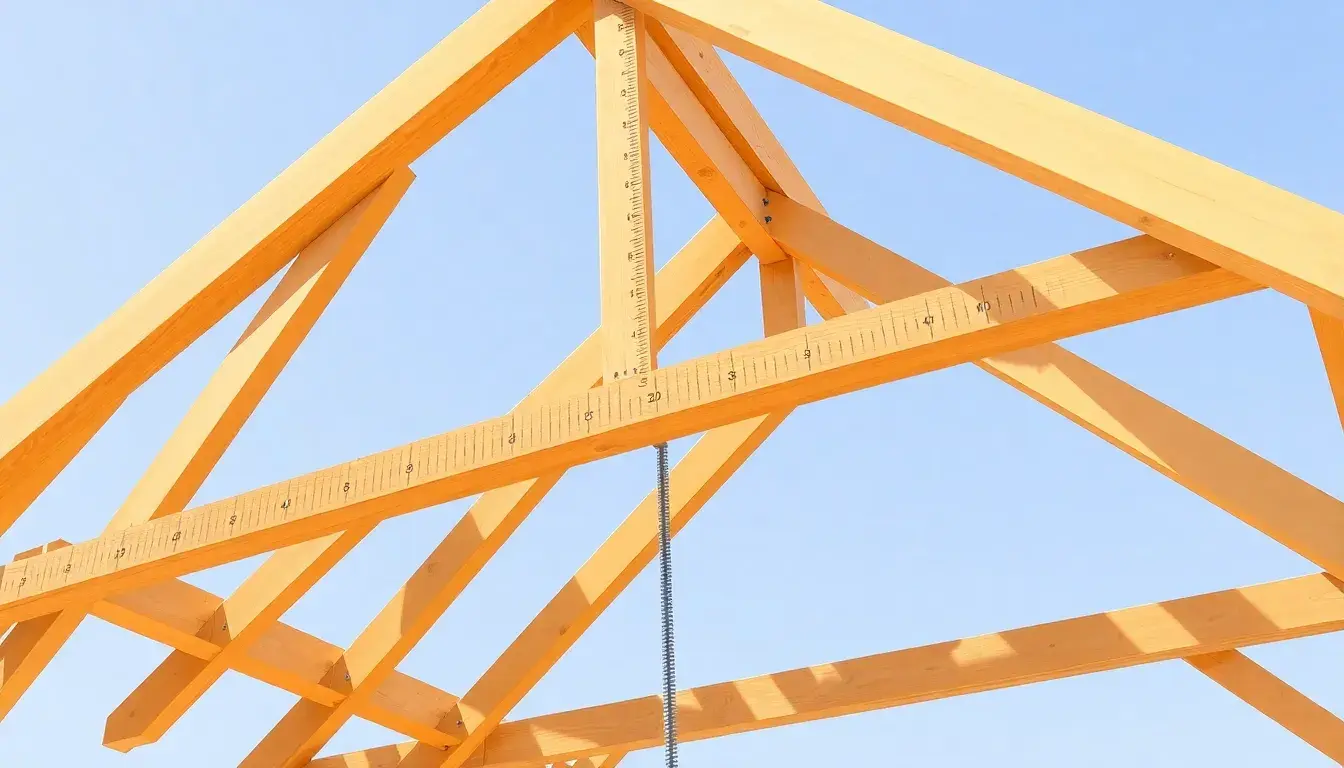
Before we start swinging hammers, we need to speak the language of the roof. To the uninitiated, a roof is just a slope, but to a builder, it’s a series of right-angled triangles. The three pillars of this geometry are the Run, the Rise, and the Slope (or Pitch).
The Run: This is the horizontal distance the rafter covers. Usually, it's half the total span of the building (if the ridge is centered).
The Rise: The vertical height of the roof from the top of the wall to the top of the ridge board.
The Span: The total width of the building from wall to wall.
Pro Tip: When using a rafter calculator, always double-check if you are measuring to the outside of the wall plate or including the thickness of the ridge board. These small details can shift your measurements by half an inch—which matters when you're looking for a tight fit!
Why does this matter? Because the "hypotenuse" of the triangle formed by the run and the rise is your rafter length. While we could use the Pythagorean theorem ($a^2 + b^2 = c^2$), an online tool makes this instant and error-free, especially when you’re dealing with fractions and inches on a dusty job site.
The Perks of Using a Rafter Calculator
I remember my first framing job. I spent more time scribbling on a scrap piece of 2x4 with a blunt carpenter's pencil than I did actually cutting wood. I was terrified of "shorting" the lumber. Once I switched to using digital tools like the ones on Calczen.com, my confidence skyrocketed. Here is why you should never frame without one:
1. Precision in Every Cut
Even a 1/8-inch error can cause a gap at the ridge or a "birdsmouth" cut that doesn't sit flush. A digital tool calculates to the decimal, ensuring that your measurements are theoretically perfect. You just need to follow the line.
2. Material Savings
Lumber isn't cheap these days. Knowing exactly how long your boards need to be allows you to buy the right length of timber (10ft vs 12ft vs 14ft) without paying for excess that just ends up in the scrap pile. It’s better for your wallet and the environment.
3. Speed and Efficiency
Instead of wrestling with a calculator and manual trig functions, you plug in two numbers and get a result in milliseconds. This keeps the flow of the build going. In construction, time truly is money.
Common Mistakes to Avoid
Even with a great rafter calculator, human error can sneak in. Here are the "red flags" I've learned to watch out for over the years:
Forgetting the Overhang: The calculator gives you the length from the wall to the ridge. If you want eaves (overhang), you need to add that length separately or account for it in your total lumber purchase.
Ignoring the Ridge Board: Your rafters meet at a ridge board. You usually need to subtract half the thickness of that board (often 3/4 of an inch for a 2x ridge) from your calculated run to get the actual cut length.
Mixing Units: Ensure you are working consistently in feet or inches. Our tool at Calczen handles decimal feet beautifully, but always keep your tape measure units in mind!
Calculate Smarter with Calczen
Ready to get that roof framed? Don't let the math slow you down. Head over to our Construction & DIY Estimators section for more precision tools.
We believe that math shouldn't be a barrier to creativity or home improvement. That’s why Calczen.com is built to be fast, ad-light, and incredibly intuitive. We’ve all been on those sites that are so cluttered with pop-ups you can’t even see the "Equals" button. We hate that too.
Whether you're calculating your next mortgage payment or figuring out the pitch of a roof, our mission is to provide tools that work as hard as you do. Bookmark us for your next project, and handle your numbers with total confidence.