New Feature: Calculator results are now clearer and easier to use ⚡

Subscript Text Generator

61 Uses
6 min read
Verified Accuracy

Disclaimer: The results provided by this calculator are for informational and educational purposes only and should not be considered professional advice. Accuracy is not guaranteed, and you should consult a qualified professional for decisions related to finance, health, legal matters, or medical treatment. By using this tool, you acknowledge that CalcZen.com is not responsible for any actions taken based on its results.

calczen-widget
⚡ Powered by CalcZen • Secure & Private • Real-time Results

The Evolution of the Subscript: Navigating the History of Small-Scale Typography on Calczen.com

C

CalcZen.com

Updated: May 26, 2026

subscript generator

Have you ever looked at a chemical formula like H₂O and wondered how we ended up with those tiny, floating numbers at the bottom? It feels so natural today, but the journey of the subscript generator of ideas in our written language is actually a fascinating tale of necessity, engineering, and the quest for clarity. Whether you're a student scribbling notes, a scientist documenting a breakthrough, or just someone curious about why our text looks the way it does, understanding the history of vertical alignment is like peeking behind the curtain of human communication.

We live in a world where we expect our text to be flexible. We want it to be bold, italicized, or shrunk down to a tiny corner of the line without much thought. But for most of history, getting a character to sit just a few millimeters below the "baseline" was a monumental task of craftsmanship. Today, we’re going to explore how we moved from heavy metal blocks to the seamless Unicode world of the modern subscript generator of creative expression.

The Birth of the Baseline: Why We Needed Subscripts

In the early days of handwritten manuscripts, scholars didn't have strict rules for where a letter should sit. However, as mathematics and chemistry began to formalize in the 17th and 18th centuries, the "horizontal" nature of text started to feel a bit crowded. Scientists needed a way to distinguish between a quantity (like two apples) and a molecular structure (like two atoms of hydrogen).

Imagine trying to write complex equations where every number is the same size as the letters. It becomes a jumbled mess. The subscript was born out of a desperate need for "semantic layering." By dropping a character below the main line, we could signal to the reader: "This information is related to the letter above it, but it's playing a different role."

Did You Know?
The term "subscript" literally comes from the Latin sub (under) and scribere (to write). It was originally a physical description of the scribe's action of dipping their pen and placing a mark slightly lower than the rest of the sentence.

The Era of Metal and Ink: Traditional Typesetting

If you were a printer in the 1800s, producing a subscript wasn't as simple as clicking a button. You were working with physical pieces of lead and antimony. To create that dropped effect, you had to use "superior" and "inferior" typefaces. These were specially cast miniature letters that lived in their own tiny compartments in the printer's tray.

The Mechanical Challenge

Printers had to use "leads" and "slugs"—thin strips of metal—to create the spacing around the main line of text to ensure the tiny subscript didn't get crushed or misaligned. It was a tedious, manual version of what we now consider a simple subscript generator process. If a printer ran out of the "small 2s," they couldn't just scale down a large one; they had to wait for a new shipment from the foundry.

The Uniformity of Science

As the industrial revolution hit, the demand for textbooks skyrocketed. This pressured font designers to create standardized sets of small-scale characters. This is why, even today, a well-designed subscript isn't just a "shrunken" version of a normal letter; it’s actually slightly thicker in proportion so that it remains legible even at a tiny size. If you simply shrink a letter, the thin lines disappear. A true subscript is engineered for its height.

The Digital Leap: From ASCII to Unicode

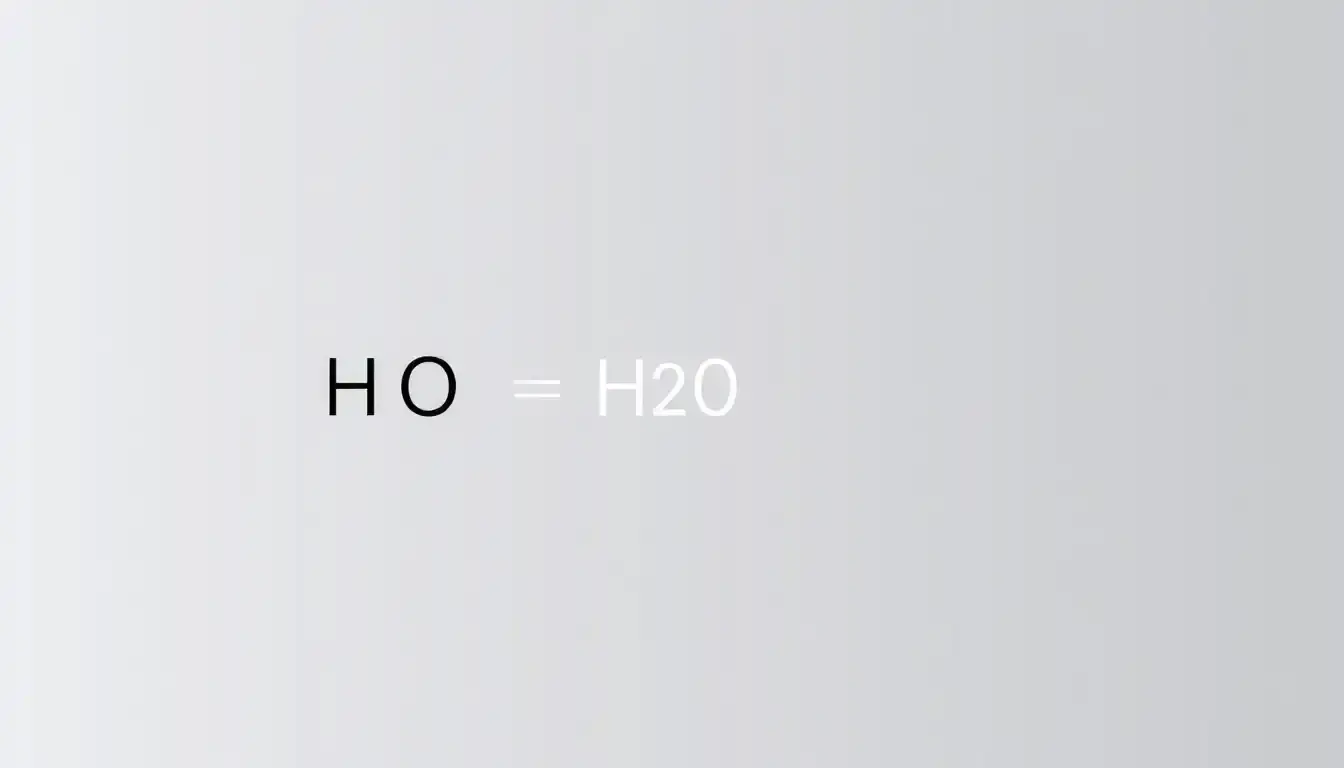
When computers first entered the scene, they were incredibly limited. Early systems used ASCII, which only had 128 characters. There was no room for fancy formatting, let alone subscripts. If you wanted to write "H2O," you wrote H2O, and everyone just had to use their imagination. This was a dark age for digital scientific clarity.

The Arrival of Unicode

Everything changed with the advent of Unicode. The goal of Unicode was to give every single character in every language a unique number. But they didn't stop at languages; they included mathematical symbols and, eventually, a specific block of characters for superscripts and subscripts. This allowed text to carry its "smallness" with it, regardless of the app or website you were using.

Why Standard Text Matters

The beauty of modern character sets is that they allow for "plain text" formatting. Unlike a Word document where the subscript is a styling layer that can get lost when you copy-paste, Unicode subscripts are actual, independent characters. This is the secret sauce behind any reliable subscript generator of digital content you see today. It ensures that when you send a chemical formula in a text message, it doesn't arrive as a garbled string of large numbers on your friend's phone.

Creative Uses: Beyond the Laboratory

While subscripts started in the world of H₂O and CO₂, they’ve escaped into the wild world of social media, branding, and creative writing. We see them used in "aesthetic" usernames, digital art, and even to add a certain "vibe" to a blog post. This is part of the Randomizers & Creative Tools category of digital life that makes the internet fun.

  • Digital Identity: Using small text to create unique handles that stand out in a sea of standard fonts.
  • Emphasis: Subscripts can act as a "whisper" in text form, providing a different tone than bold or italics.
  • Visual Hierarchy: Helping designers create complex layouts without needing heavy software.

Ready to Transform Your Text?

Stop fighting with complex formatting and hidden menus. Whether you're finishing a chemistry report or just want to add a unique flair to your social profile, our Subscript Text Generator is here to help you get it done in seconds.

Explore All Free Tools at Calczen.com

The Future of Text Alignment

As we move toward more immersive digital environments, the way we handle "small" information continues to evolve. We’re seeing more support for complex scripts and mathematical notation in browsers than ever before. The core philosophy of Calczen.com is that these technical hurdles shouldn't slow you down. We believe that whether you're calculating a mortgage or just looking for the right way to display a formula, the tool should be invisible, fast, and helpful.

Next time you see a tiny number nestled at the foot of a letter, take a second to appreciate the centuries of printers, scientists, and software engineers who worked to make that little character possible. It’s a small detail, but it’s one that makes our world a whole lot clearer.
Share this Tool

Discussion (0)

Moderated
Security Check: 5 + 7 =

No comments yet. Start the conversation!

Related Tools & Calculators

Master Your Data.

Get weekly updates on new financial regulations, mathematical formulas, and CalcZen tools.

Join 25,000+ data-driven professionals. No spam, ever.

CALCZEN