Disclaimer: The results provided by this calculator are for informational and educational purposes only and should not be considered professional advice.
Accuracy is not guaranteed, and you should consult a qualified professional for decisions related to finance, health, legal matters, or medical treatment.
By using this tool, you acknowledge that CalcZen.com is not responsible for any actions taken based on its results.
Decoding the Numbers: A Deep Dive into Understanding Tire Diameter for Performance and Safety
C
CalcZen.com
Updated: Jul 08, 2026
We’ve all been there: standing in a tire shop or scrolling through endless pages of automotive specs, staring at a string of numbers like 245/45R18 and wondering what on earth they actually mean for our daily commute. It’s easy to think that a tire is just a piece of rubber, but the truth is that your tire diameter calculator knowledge—or lack thereof—directly dictates how your car handles, how much fuel you burn, and even how accurate your speedometer is.
Whether you're looking to upgrade your rims for a sleeker look or you're a DIY enthusiast deep into Construction & DIY Estimators projects, getting the diameter right is non-negotiable. In this guide, we're going to break down the science of the sidewall, the math of the rim, and why these measurements are the heartbeat of your vehicle’s performance.
The Anatomy of a Tire: More Than Meets the Eye
Before we jump into the heavy lifting of math, we need to speak the language of the tire. Every tire has its life story written on its sidewall. Understanding these figures is the first step toward mastering the tire diameter calculator logic that keeps your car running smoothly.
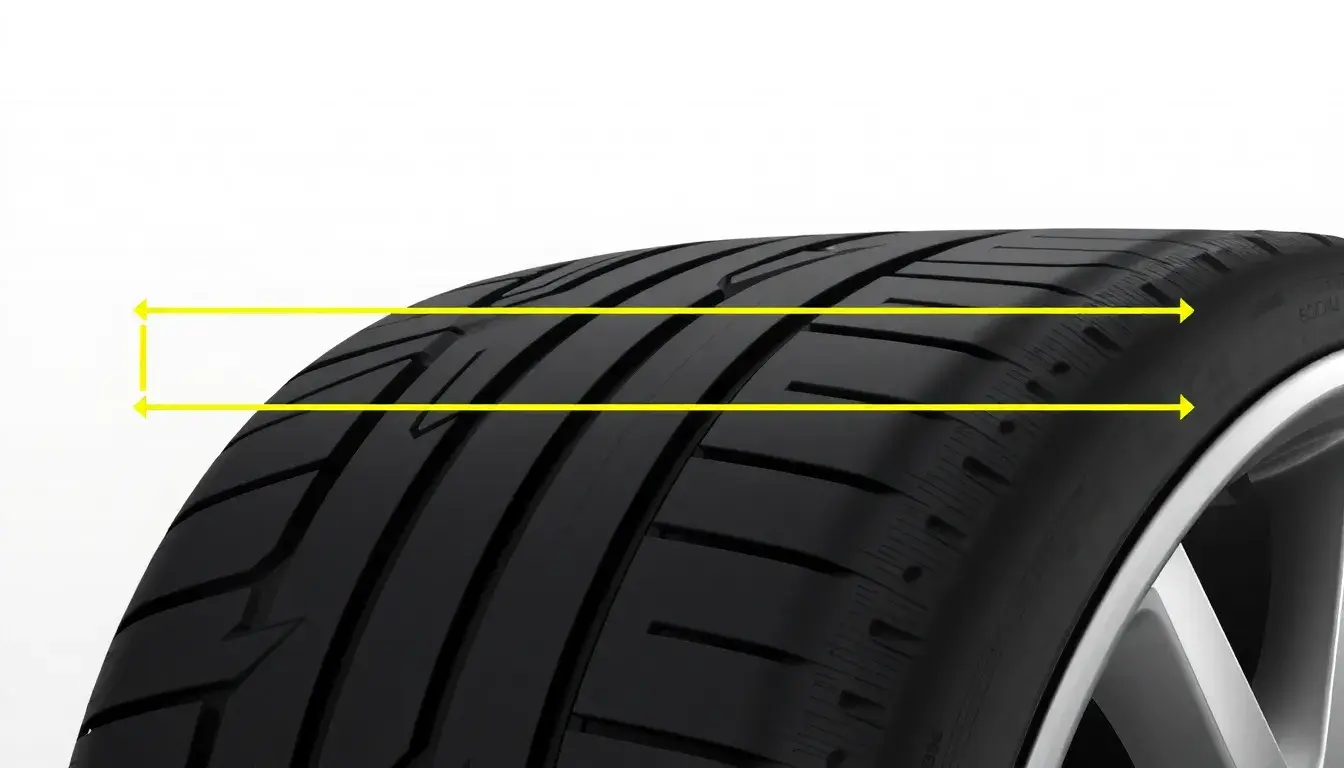
When you look at a tire code, you're seeing three primary components: the Section Width, the Aspect Ratio, and the Wheel Diameter. Together, these create the "Total Diameter," which is the height of the tire from the ground to the very top. If this total height changes significantly from your factory settings, you're not just changing the look; you're changing the gear ratio of your car.
The Golden Rule of Tire Sizing: Generally, automotive experts recommend staying within a 3% variance of your original tire diameter. Going beyond this can lead to brake failure issues, transmission stress, and wildly inaccurate speed readings.
Breaking Down the Math: The Sidewall Secret
Calculating the total height of a tire feels like a high school geometry problem, but it’s one with real-world consequences. To find the diameter, we have to account for the rim and the "cushion" of air—the sidewall—on both the top and the bottom of that rim.
1. The Section Width (The First Number)
The first number in a sequence (e.g., 225) is the width of the tire in millimeters. It’s measured from sidewall to sidewall. While a wider tire offers more grip, it also creates more rolling resistance. For our tire diameter calculator goals, this width is the foundation for determining height.
2. The Aspect Ratio (The Percentage)
This is where most people get tripped up. The second number (e.g., 45) isn't a measurement in millimeters; it’s a percentage. It tells us that the height of the sidewall is 45% of the width. This means a 225/45 tire has a shorter sidewall than a 245/45 tire, even though both have an aspect ratio of 45. Understanding this proportional relationship is key to predicting how a new set of tires will sit in your wheel well.
3. The Rim Diameter (The Final Piece)
The last number (e.g., 17 or 18) is the diameter of the wheel itself in inches. Yes, the automotive world loves to mix metric (millimeters) and imperial (inches) units, which is exactly why things get confusing! To get a final diameter, we have to convert everything into one unified measurement.
Why Diameter Actually Matters
You might be wondering, "Does an extra half-inch really matter?" The short answer is: absolutely. Your vehicle's onboard computer is calibrated to a specific tire height. Every time that tire completes a full rotation, the computer calculates how far you've traveled. If the diameter is larger than stock, the tire covers more ground per revolution, making your speedometer show a lower speed than you're actually traveling. This is how "accidental" speeding tickets happen!
Furthermore, for those involved in automotive research, it’s well-known that tire height affects torque. A smaller diameter tire effectively shortens your gearing, giving you snappier acceleration but higher engine RPMs on the highway. A larger diameter tire does the opposite—it's great for fuel economy at cruising speeds but makes the car feel "sluggish" off the line.
Suspension and Clearance
Beyond the engine, there’s the physical space. If your tire diameter calculator results show a height that's too tall, you risk "rubbing." This happens when the tire hits the inner fender liner or the suspension struts during a sharp turn or when hitting a bump. Not only is this annoying, but it can also lead to catastrophic tire failure if the sidewall is sliced by a sharp piece of bodywork.
Calculate with Confidence at Calczen.com
Tired of doing the math on napkins? We’ve built a suite of free, fast, and ad-light tools to help you get the numbers right the first time. From automotive sizing to home improvement, we've got you covered.
If you're planning on "Plus Sizing"—the practice of increasing your rim size while decreasing your sidewall height to keep the overall tire diameter calculator result the same—here are a few things to keep in mind:
Weight Matters: Larger rims are often heavier than the tires they replace. This increases "unsprung weight," which can make your suspension feel harsher.
Load Ratings: Never choose a tire with a lower load index than your vehicle’s manufacturer recommends. A lower profile tire might look cool, but it must be able to support the weight of the car.
Pressure Sensitivity: Low-profile tires (those with small aspect ratios) have less air volume. They are much more sensitive to pressure changes and more prone to rim damage from potholes.
Real-World Scenario: The Off-Road Upgrade
I recently helped a friend who wanted to put "beefier" tires on his truck. He went from a 31-inch total diameter to a 33-inch. He loved the look, but suddenly his automatic transmission started shifting strangely. Why? Because the computer thought he was going slower and under less load than he actually was. After using a tire diameter calculator to find the exact percentage of change, he was able to recalibrate his vehicle's ECU. Now, it drives like it came from the factory with those 33s.
Conclusion: Knowledge is Traction
At the end of the day, understanding your tire diameter calculator needs is about more than just aesthetics—it’s about the harmony between your vehicle and the road. By mastering the relationship between width, aspect ratio, and rim size, you ensure that your car remains safe, efficient, and fun to drive. Whether you're a hardcore gearhead or just someone who wants to make sure their new tires won't rub, taking ten minutes to crunch the numbers is the smartest move you can make.
Don't let the metric-to-imperial confusion slow you down. Armed with the right knowledge, you can approach your next tire purchase with the confidence of a pro. Remember, the right fit isn't just about what looks good in the driveway—it's about what performs best at 70 miles per hour.