Disclaimer: The results provided by this calculator are for informational and educational purposes only and should not be considered professional advice.
Accuracy is not guaranteed, and you should consult a qualified professional for decisions related to finance, health, legal matters, or medical treatment.
By using this tool, you acknowledge that CalcZen.com is not responsible for any actions taken based on its results.
Perfect Your Stance with the Ultimate Wheel Offset Calculator Guide on Calczen.com
C
CalcZen.com
Updated: Jul 14, 2026
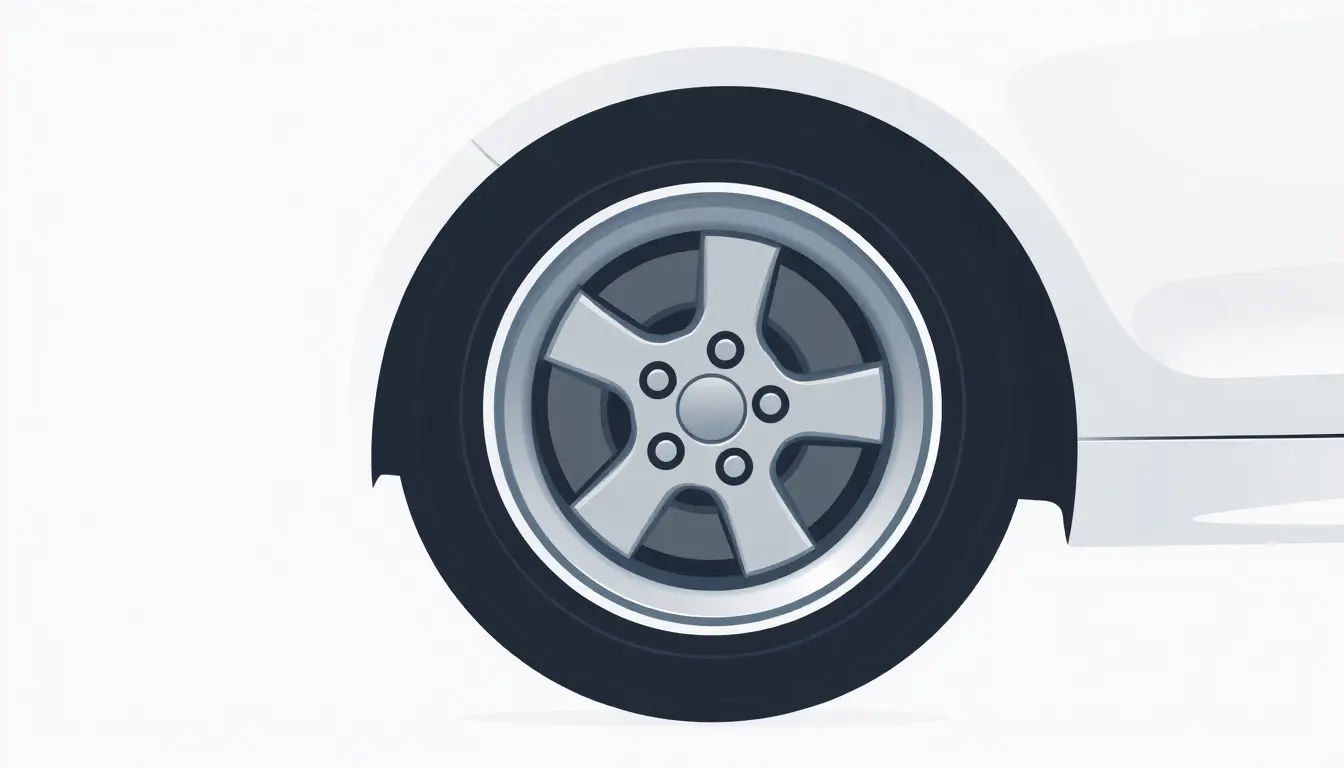
Before we dive into the nitty-gritty of the math, let's break down the concept. In the simplest terms, wheel offset is the distance from the hub mounting surface to the centerline of the wheel. It determines how far the wheel sits "in" or "out" of the wheel well.
Ever stared at a set of aftermarket wheels online, heart racing, only to stop dead in your tracks because you weren't sure if they'd actually fit? We've all been there. You want that flush, aggressive look, but the fear of your tires rubbing against the fender or hitting your suspension struts is real. That’s where a reliable wheel offset calculator becomes your best friend. At Calczen.com, we believe that modifying your car shouldn't feel like a high-stakes gambling match.
What Exactly is Wheel Offset Anyway?
Think of it like this: if you’re wearing shoes that are too wide, you might trip. If they’re too narrow, you lose your balance. Your car is the same way. The offset dictates the track width and affects everything from steering response to how much stress is put on your wheel bearings.
Pro Tip: Most factory wheels have a "positive" offset, meaning the mounting surface is closer to the street side of the wheel. This keeps the tire tucked neatly under the fender for better fuel efficiency and protection from road debris.
When you start browsing for new rims, you’ll encounter three types of offset:
Positive Offset: The hub mounting surface is toward the front or "face" side of the wheel. Common on front-wheel-drive cars.
Zero Offset: The hub mounting surface is exactly even with the centerline of the wheel.
Negative Offset: The hub mounting surface is toward the back or "brake" side of the wheel centerline. This gives you that "deep dish" look often seen on lifted trucks and classic muscle cars.
Why You Need a Wheel Offset Calculator
If you're upgrading from an 8-inch wide wheel to a 9.5-inch wide wheel, it’s not just a matter of adding 1.5 inches. Because the wheel grows on both sides of the mounting point, the "poke" (how far it sticks out) and the "inset" (how close it gets to the suspension) both change. Trying to calculate this manually on a napkin while browsing Craigslist is a recipe for disaster.
The Math Behind the Magic
When you use a Wheel Offset Calculator, you are essentially comparing two setups. You input your original wheel width and offset, then your new intended width and offset. The tool then tells you two critical numbers:
Inner Clearance: How much closer (or further) the wheel will be to your struts.
Outer Position: How much further the wheel will extend toward the fender.
I remember the first time I tried to "eyeball" it on my old project car. I bought a set of beautiful BBS reps, bolted them on, and the moment I turned the steering wheel, I heard that soul-crushing scraaaaape. If I had just spent two minutes on a clean, no-nonsense tool like the ones we host here, I would have known I needed a 5mm spacer or a slightly higher offset.
The Danger of Getting It Wrong
It’s not just about aesthetics. While a "stanced" car looks great at a show, improper fitment can be dangerous. If your offset is too low (wheels stick out too far), you risk "fender-roll" situations where the sharp edge of the metal cuts into your tire sidewall during a bump. On the flip side, if the offset is too high, the inner rim can rub against brake calipers or suspension components, potentially leading to catastrophic failure at highway speeds.
Scrub Radius and Handling
Changing your offset significantly alters something called the "scrub radius." This is the distance between where the steering axis intersects the ground and the center of the tire's contact patch. If you move the wheel too far out, you increase leverage on your suspension, which can make the steering feel heavy, twitchy, or prone to "tramlining" (where the car follows every groove in the road).
How to Measure Like a Pro
Before you plug numbers into our Wheel Offset Calculator, you need accurate data. Most wheels have their specs stamped on the back of the spokes or on the mounting hub. Look for something like "18x8.5 ET35."
18: The diameter in inches.
8.5: The width in inches.
ET35: This is the offset (ET stands for Einpresstiefe, German for "insertion depth"). In this case, it’s 35mm.
If you can’t find these numbers, you can measure them yourself! Lay the wheel flat on the ground (face down on a towel so you don't scratch it). Place a straight edge across the back of the rim and measure the distance down to the mounting pad. That’s your backspacing. Subtract half of the total wheel width from that number, and boom—you’ve found your offset.
Ready to Find Your Perfect Fit?
Stop guessing and start calculating. Our suite of free tools at Calczen.com is designed to give you instant, ad-free results so you can shop for parts with total confidence.
Even with a great wheel offset calculator, there are a few traps that beginners fall into. Here’s how to stay ahead of the game:
1. Ignoring Tire Size
The wheel is only half the story. A "stretched" tire (narrow tire on a wide rim) might clear a fender that a "beefy" tire would hit. Always consider the profile and width of the rubber you plan to mount. If you're going wider on the rim, you’ll likely need to adjust your tire aspect ratio to keep your speedometer accurate.
2. Not Accounting for Brake Clearance
This is a big one. Two wheels can have the exact same width and offset but different spoke designs. If you have "Big Brake Kits" (BBK), the curvature of the spokes matters just as much as the mounting point. Always check "X-Factor" clearance if you're running Brembos or similar performance calipers.
3. Forgetting About Suspension Geometry
As your car moves up and down (compression and rebound), the wheels don't just move straight. They often tilt (camber) or move in an arc. A wheel that looks fine while the car is parked on level ground might smash into the fender the moment you drive up a steep driveway. (Pro tip: Use the "broomstick test"—tape a string with a weight to your fender and measure the gap to the tire to see exactly how much room you have to play with.)
The Calczen Philosophy: Simple, Fast, Reliable
We built Calczen.com because we were tired of "free" sites that felt like they were from 1998, covered in flashing banners and pop-up ads that make your phone lag. When you're under the car with greasy hands trying to figure out if a set of spacers will fix your clearance issues, you need a tool that loads instantly and works perfectly on mobile.
Our Wheel Offset Calculator is part of our commitment to providing high-quality math resources for real-world problems. Whether you're a student, a professional builder, or just someone who wants their commuter car to look a little sharper, we’ve got your back.
Conclusion: Calculate Smarter, Drive Better
At the end of the day, understanding wheel fitment is a rite of passage for any car enthusiast. It’s the difference between a car that looks "okay" and one that has a presence on the road. By using a wheel offset calculator, you’re taking the guesswork out of the equation and ensuring your vehicle remains safe, functional, and stylish.
So, go ahead and bookmark Calczen.com. Next time you're browsing the forums or looking at a marketplace deal that seems too good to pass up, run the numbers first. Your car—and your wallet—will thank you.